
Contact
Head of Department: Nicole Bailey
Email: [email protected]
Year 9
Year 9
The Year 9 Elective Geography course is designed to deepen students’ curiosity about the world by exploring diverse and dynamic geographical environments, processes and contemporary challenges. Students investigate both physical and human geography, including focus areas such as Planet Earth, Extreme Environments, Oceanography and Primary Production, while developing an understanding of the interactions between people, places and environments across a range of scales.
Throughout the course, students engage with complex local and global geographical issues and consider how these shape communities, environments and futures. They strengthen their geographical inquiry skills through the use of maps, fieldwork, data, graphs and spatial technologies, with a strong emphasis on critical thinking, analytical skills and in-depth research.
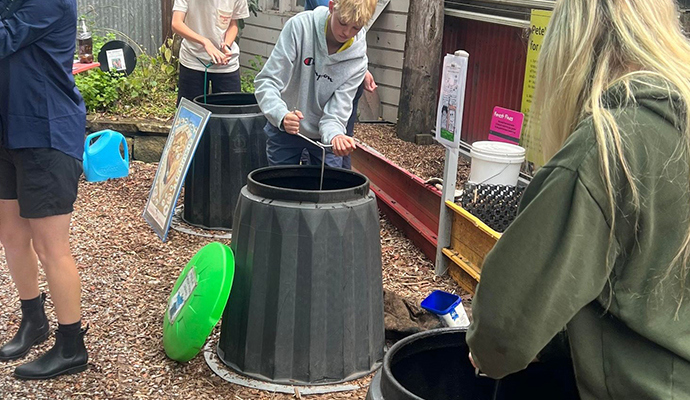
A key feature of the course is fieldwork at Minnamurra, where students investigate catchment processes through their study of Primary Production and Oceanography, collecting and analysing primary data to understand flows, connections and environmental change within the system.
Students will also undertake a school-developed unit in sustainable urban geography, incorporating the STEM Schools Challenge at Sydney Science Park, where they design innovative, resilient and liveable communities.
Through these experiences, students are supported to become proactive, informed and responsible citizens, prepared to respond thoughtfully to contemporary geographical issues.
Assessment
Assessment Structure:
-
Catchment Fieldwork and Skills
-
Infrastructure Presentation and Report
-
Written examination
Year 10
Year 10
The Year 10 Elective Geography course is designed to deepen students’ curiosity about the world through the exploration of diverse and dynamic geographical environments, processes and contemporary issues. Students will investigate a range of physical and human geography topics, including Australia’s Neighbours, Political Geography, and Interactions and Patterns along a Transcontinental Transect, while strengthening their understanding of the interactions between people, places and environments across a variety of scales.
Throughout the course, students engage with complex geographical issues and develop their capacity to analyse patterns, processes and relationships using key geographical concepts. They refine their geographical inquiry skills through the application of maps, fieldwork, data analysis, spatial technologies and independent research, with a strong emphasis on critical thinking and evidence-based conclusions.
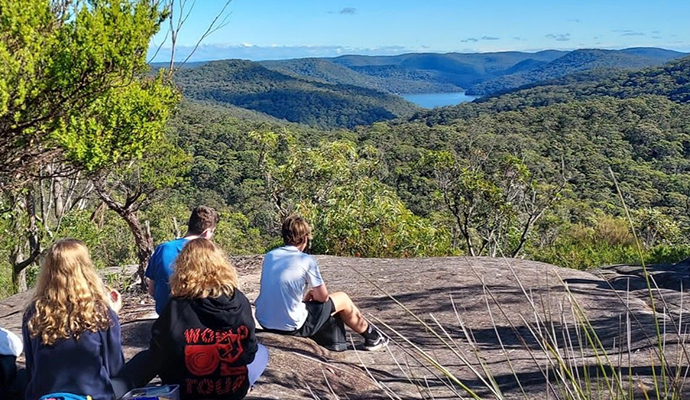
Fieldwork experiences provide opportunities for students to collect and interpret primary data in authentic contexts. A key investigation examines the distribution and characteristics of bushfires in Australia, including natural processes and human influences such as climate change. Students will conduct field investigations in bushland settings and analyse supporting data, developing practical skills such as estimating fuel loads, measuring environmental conditions and interpreting spatial information.
The assessment program is flexible, incorporating a range of inquiry-based tasks that allow students to demonstrate their knowledge and skills through research, investigation and applied learning experiences.
Year 10 Assessment
Assessment Structure:
-
Topographic Map Disaster Risk Fieldwork
-
Podcast
-
Google Earth Transect Analysis
Year 11
Preliminary and HSC Course
The Year 11 Geography course provides students with a comprehensive understanding of the processes and interactions that shape natural and human environments. The course develops students’ ability to analyse spatial patterns, environmental functioning and the complex relationships between people, places and ecosystems across a range of scales.
Students study Earth’s natural systems, examining how biophysical processes such as energy flows, nutrient cycles and geomorphic change operate within ecosystems. This is supported through fieldwork at the Stockton Sand Dunes, where students investigate coastal processes, dune dynamics and ecosystem functioning.
In People, patterns and processes, students explore population distribution, human wellbeing and the cultural, economic and social processes that shape places. Fieldwork at Walsh Bay focuses on investigating the ‘culture of place’, analysing how historical and contemporary influences shape the character and function of an urban environment.
Students also examine Human–environment interactions, investigating how people perceive, use and manage environments, and the implications for sustainability.
Another component of the course is the Geographical Investigation, where students undertake an in-depth, student-directed inquiry into a local issue, such as Waitara. This process involves formulating a research question, collecting and analysing primary and secondary data, and applying geographical concepts to draw evidence-based conclusions.
Throughout the course, students develop geographical inquiry skills through fieldwork, data interpretation, mapping and spatial technologies, building critical thinking and preparing them for the HSC course.
Year 11 Fieldwork
-
Term 1 Earth’s natural systems - Stockton Beach and Sand Dunes
-
Term 2 People, patterns and processes - Walsh Bay, Sydney
Assessment structure
Year 11 Assessment
-
Earth’s natural systems Fieldwork and Skills
-
People, patterns and processes Report
-
Written examination
Year 12
Year 12 Geography (HSC Course)
In the Year 12 course students will learn about contemporary environmental, economic and social issues across a range of scales. In Ecosystems and Global Biodiversity, students investigate the functioning, resilience and management of ecosystems through case studies such as the Great Barrier Reef and Fiordland National Park, examining biophysical processes, human impacts and conservation strategies.
In Rural and Urban Places, students explore the nature and dynamics of rural and urban environments, with case studies including Tamworth, New York City and the Darling Harbour Precinct, analysing economic activity, population change, urbanisation and planning for liveability.
In Global Sustainability, students examine the environmental, social and economic dimensions of sustainability in a globalised world, using Global Winemaking as a case study to evaluate how industries respond to challenges such as climate change, resource management and global markets.
Across all topics, students apply geographical inquiry skills, including fieldwork, spatial technologies and data analysis, to develop evidence-based conclusions and informed responses.
Assessment Structure
Year 12 Fieldwork
-
Term 1 Ecosystems and Biodiversity – Chowder Bay
-
Term 2 Urban Places – Darling Harbour Precinct