
Design and Technology Materials provides students with the opportunity to design, create and evaluate practical solutions using a wide range of materials and technologies. The course develops creativity, problem-solving and project management skills through a hands-on, project-based approach. Students learn to identify real-world needs and opportunities, generate ideas, and refine them into functional and aesthetically considered outcomes.
A strong emphasis is placed on the design process, enabling students to research, prototype, test and evaluate their ideas. They are encouraged to think critically about how products can be improved and how design can respond to changing social, environmental and technological needs. Sustainability and responsible material selection are also explored.
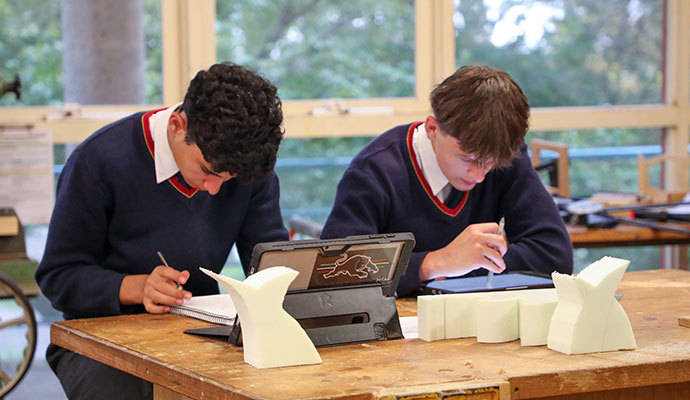
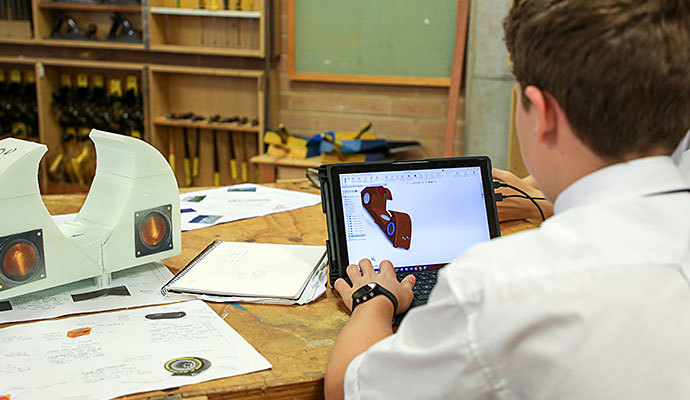
Students work with materials such as timber, metals, plastics and emerging technologies, using both traditional workshop tools and computer-aided design (CAD). They develop confidence in safely using tools, managing projects and communicating ideas visually and in written form.
This course provides a strong foundation for further study in design, engineering and technology-related fields, while also developing transferable skills applicable across a wide range of future pathways.
Contact
Head of Department: Emily Nightingale
Email: [email protected]
Year 9
In Year 9, students are introduced to the design process and develop foundational skills in designing and producing multi-material solutions. They learn to identify problems, research existing designs and generate creative ideas, with an emphasis on experimentation and refinement.
Students build practical skills in the safe use of tools and equipment, while learning to communicate ideas through sketching and computer-aided design. They begin managing their own projects and documenting their design thinking. The course encourages curiosity, creativity and resilience as students explore how materials and technologies can be used to create effective design solutions.
Note: This subject is currently delivered as Design and Technology. Following syllabus changes from NESA, from 2027 it will be renamed Design Innovation Technology. When selecting elective choices, please choose Design Innovation Technology.
Year 10
Year 10 deepens students’ understanding of design concepts, emerging technologies and industry practices. Students refine their ability to manage projects independently, from concept development through to production and evaluation.
They expand their practical skills across a wider range of materials and techniques while strengthening their ability to communicate ideas visually and in written form. Greater emphasis is placed on innovation, sustainability and real-world applications. Students are encouraged to think critically about the impact of design decisions on people, society and the environment.
Note: From 2028, following syllabus changes from NESA, this subject will be delivered as Design Innovation Technology (previously Design and Technology). When selecting elective choices, please choose Design Innovation Technology.
Year 11
Preliminary and HSC Course
Students apply design methodology to complex, self-directed projects that address real-world needs. They explore the relationship between design, technology, society and the environment, developing a deeper understanding of innovation and emerging technologies. Students undertake extensive research, develop and communicate ideas using advanced visual and digital techniques, and produce high-quality design solutions using a range of materials and technologies.
In the Preliminary course, there is a focus on developing core design knowledge and skills, including research methods, idea generation, prototyping and an introduction to managing projects. Students build confidence in applying the design process and documenting their thinking.
In the HSC course, students refine these skills through a major design project, demonstrating greater independence, time management and critical evaluation. Practical work is supported by a design portfolio documenting decision-making and problem-solving.
This course prepares students for tertiary study and careers in design, engineering, architecture and related fields.